
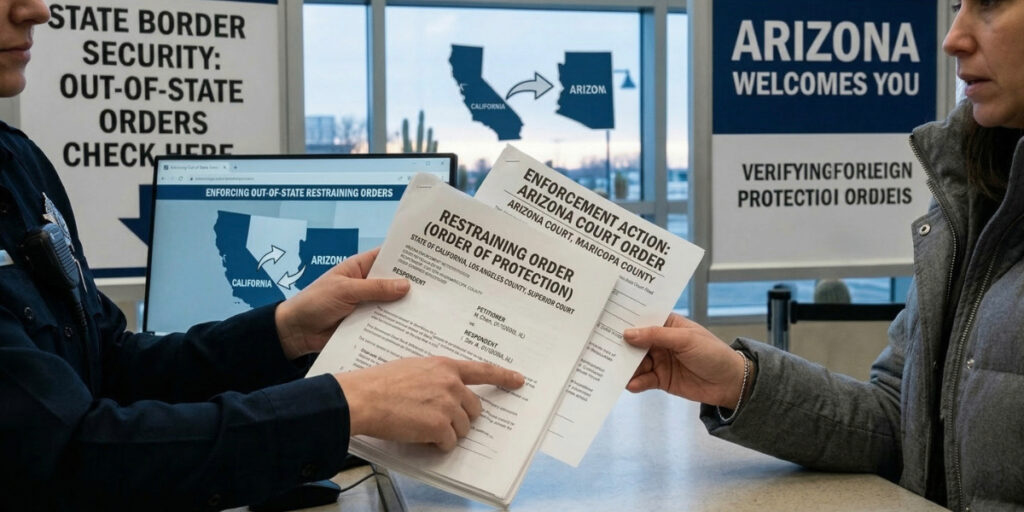
Understanding Out-of-State Restraining Orders in Arizona
Moving to a new state can be an overwhelming, nerve-racking experience on its own. When you add the tangled issues of maintaining a restraining order that was issued elsewhere, it can feel like every little twist and turn creates a maze of legal questions. However, if you are moving to Arizona with an existing restraining order in place, it is important to know that many of these orders can still be enforced under Arizona law. This opinion editorial aims to shed light on this topic by discussing the key protection guidelines in Arizona, sharing practical steps for registration, and exploring how family law issues often mix with restraining order matters.
Arizona recognizes that victims of abuse deserve protection, no matter where the order was originally issued. Both federal law and state statutes work together to ensure that those who seek help continue to have the legal safeguards they need after moving. While the original process might seem full of problems and confusing bits, understanding how to handle an out-of-state restraining order in Arizona can make a big difference for those who want to maintain their safety and peace of mind.
Arizona Enforcement of Out-of-State Protective Orders
In Arizona, law enforcement officials are empowered to enforce protective orders issued by other states, provided that the order meets the necessary legal requirements. This system of acknowledging external orders is based on the concept of full faith and credit, a principle embedded in federal law. Essentially, if the originating court had proper jurisdiction and the restrained person was informed of the proceedings, then Arizona police are able to step in when an abuser violates the order within the state.
It is important for victims to keep proof of their restraining order on hand when moving. Having a digital or paper copy readily available may help law enforcement verify the order quickly, particularly in stressful and scary situations. Although registering the order with local Arizona authorities is often optional, doing so can sometimes make it simpler for officers to confirm its validity during an emergency.
Key Protection Guidelines for Arizona Law Enforcement
Arizona law explicitly provides for the enforcement of protective orders to safeguard victims of domestic violence and harassment. The state relies on statutes, such as A.R.S. § 13-3602, to guide decisions related to orders of protection. These legal tools are designed to restrict a potential abuser from contacting, approaching, or harassing the protected person. Whether the order originates from within Arizona or from another state, the overriding objective is to ensure safety.
To better understand how these orders work in practice, consider the following bullet list that outlines some of the most common provisions found in a restraining order:
- Limiting or prohibiting all forms of contact, including phone calls, texts, emails, and in-person visits.
- Mandating that the abuser maintain a defined distance from the protected person’s home, work, or school.
- Establishing specific boundaries regarding shared assets, such as a family residence or child custody agreements.
- Offering temporary measures by way of a short-term order, which may be extended following a court hearing.
These guidelines are implemented with the intent to protect the individual and create legal consequences if the abuser steps out of line. Even if the victim is moving from one state to another, Arizona law can continue protecting them, provided that the initial criteria set forth by the originating court were properly met.
Effect of Moving on Your Existing Restraining Order
When relocating to Arizona, many people encounter a mix of relief at the promise of a safer environment and anxiety about the legal procedures they must confront. It is natural to worry that your established restraining order might lose its weight simply because you cross a state line. However, Arizona law strongly supports the idea that a valid out-of-state order remains in force. The aim here is clear—forcing authorities to treat the order with the same degree of seriousness regardless of where it was issued.
One of the key factors ensuring this enforcement is the “full faith and credit” clause, which essentially binds states to recognize and uphold each other’s judicial decisions. In other words, the protective mechanisms that have kept you safe in another state can continue to work in Arizona as long as the order meets the necessary legal standards.
Many people decide to register their out-of-state restraining orders with Arizona courts. Although registering is typically not a requirement, it can help prevent any misunderstandings if and when you need law enforcement assistance. In some cases, local court clerks or self-help centers can guide you through the filing process, ensuring that your documentation reaches the hands of the right authorities. Always keep in mind, though, that while clerks can assist with paperwork, they cannot offer legal advice.
Practical Steps for Registering Your Out-of-State Restraining Order
If you choose to register your restraining order after moving to Arizona, the process is generally straightforward. Registration involves notifying a local court clerk to ensure that there is a local record of your protection order. This local record can sometimes expedite enforcement if you have to call the police, as it eliminates potential confusion regarding your protection status.
Below is a practical table that outlines some of the steps and important considerations to keep in mind during the registration process:
| Step | Details | Why It Matters |
|---|---|---|
| Gather Documentation | Make sure you have a clear copy of your restraining order, including any supporting documentation. | This helps law enforcement quickly verify the order’s validity. |
| Contact the Local Court | Reach out to the court clerk in your new jurisdiction and inquire about the registration process. | A local record reduces delays and potential misunderstandings. |
| Complete the Required Paperwork | Fill in any forms and provide updated contact information or safety details as needed. | Accurate paperwork ensures that your order remains effective and enforceable. |
| Follow Up | Confirm with the clerk that your order has been successfully recorded. | This can provide extra peace of mind and prompt action during an emergency. |
While the process might seem intimidating or off-putting at first, taking these deliberate steps ensures that you continue to enjoy the protection you deserve in your new home. By making your order known locally, you create an additional layer of security that could prove critical in a high-stress moment.
Temporary vs. Permanent Orders: Getting Into the Details
Another important aspect when considering out-of-state restraining orders in Arizona is understanding whether your order is temporary or permanent. These two types of orders each come with their own set of little details that can affect everything from enforcement to the next legal steps you might need to take.
A temporary restraining order is usually issued instantly after a petition has been filed. This type of order is intended to provide immediate, short-term protection until a formal hearing can be conducted. On the other hand, a permanent restraining order results from a full court process that includes a hearing where both parties have the chance to present their case. Although the term “permanent” may not literally mean “forever,” such orders typically last longer and provide more substantial protection.
When moving with a temporary order in hand, one must be careful not to miss any upcoming court dates related to the order’s final decision. Missing a scheduled hearing in the state that originally issued the order might create issues that could weaken or even void your protection.
Consider the following bullet list that summarizes key differences:
- Temporary Orders: Issued quickly, designed to provide immediate safety, require a follow-up hearing to become permanent.
- Permanent Orders: Result from a more thorough legal process, offer longer-term protection, and might be simpler to enforce across state lines.
The decision to seek a new restraining order in Arizona, even when you already have an existing one, may depend on factors such as the order’s expiration date, ongoing risks, and any new threats that have emerged after your move. It is essential to stay organized and keep track of any court dates, hearing notices, or changes in your situation that might necessitate additional legal action.
Consequences for Abuser Violations: What You Need to Know
Despite the formidable measures set in place to protect you, there is always the risk that an abuser might violate your restraining order. Whether you are still in the process of relocating or have settled in Arizona, violations can occur, and they need to be taken seriously. Arizona law considers any breach of a restraining order as a serious offense that can result in criminal charges, arrests, or additional legal consequences.
Violations of the order might include, for example, repeated calls, texting after a no-contact rule, or showing up at locations where you are known to be. Even seemingly minor attempts to contact or intimidate you can be essential indicators that the abuser is not respecting the legal boundaries established to protect you.
If an abuser does violate the order, these are some crucial steps to take:
- Immediately call law enforcement and report the incident.
- Document all instances of contact, including texts, emails, voicemails, or any photographs that evidence the violation.
- Keep records detailing dates, times, and the nature of the incident.
- Request copies of all police reports to use as proof in any potential court proceedings.
The importance of detailed documentation cannot be understated. While isolated incidents might seem insignificant, a pattern of repeated minor breaches can bundle together to form a convincing case for why stronger protective measures might be necessary. Arizona courts take violations seriously, often applying laws such as A.R.S. § 13-2810, which addresses interference with judicial proceedings if an abuser knowingly disobeys a court order.
Balancing Family Law Issues with Protective Orders
In many cases, restraining orders in Arizona do not exist in isolation; they often mix with other family law matters, particularly in cases where children and custody issues are involved. When domestic violence or abuse is part of a history involving family members, courts immediately consider the safety of any children and other vulnerable parties when making decisions regarding custody or parenting time.
Arizona courts proceed with decisions based on the best interests of the child, which means that the existence of a restraining order might prompt measures such as supervised visits, restricted contact, or even changes in living arrangements for the child. It is important to note that while a restraining order offers protection, it does not automatically resolve every family law issue that might arise following a move from another state.
When family law concerns are on the table, many families are forced to face several new challenges, including:
- Determining which state's jurisdiction applies when custody orders exist from a previous state.
- Addressing how the restraining order impacts decisions regarding shared parenting responsibilities.
- Navigating new legal proceedings if an abuser is now residing in Arizona.
Often, the presence of an existing restraining order can complicate custody negotiations. Courts may impose limitations on contact or require that exchanges of custody be supervised to ensure the safety of all involved. In these cases, having legal guidance from a family law professional is critical to clarify the situation and protect the rights and safety of everyone involved.
Legal Support Resources for Victims of Abuse After Moving
Getting legal advice during a move can feel like venturing into a maze of tricky parts and fine points. There are numerous resources available to help victims of domestic abuse or harassment protect their rights and get the assistance they need. These resources aim to help you take a closer look at your options and ensure that every step you take is well-informed.
Some of the most helpful support resources include:
- Local Shelters and Advocacy Groups: These organizations can provide emergency housing and help while you adjust to your new environment.
- Court Self-Help Centers: Self-help centers can offer information about registering orders and filing necessary legal paperwork.
- Hotlines: Email or phone hotlines operated by organizations such as WomensLaw.org provide immediate guidance regarding protective orders and other safety measures.
- Legal Professionals: Although not a substitute for legal advice from a licensed attorney, legal paraprofessionals can offer affordable options to help you understand your available legal approaches.
These resources not only help you figure a path through the immediate issues arising from your move, but they also provide long-term guidance on managing your legal rights as you adapt to a new location. Each resource is designed to address particular areas, whether that involves clarifying the little twists of the court process or assisting in gathering all necessary documentation.
Documenting Incidents and Reporting Violations
Proper documentation and quick action can mean the difference between adequate protection and prolonged exposure to danger. When you suspect that the abuser has disregarded the restraining order, it is super important to immediately document every incident. This includes small distinctions such as the content of text messages, the tone of emails, or the duration and distance of in-person encounters.
Keeping a careful record not only supports your safety but also serves as vital evidence in any legal proceedings that might follow. Here’s a simple bullet list summarizing the recommended steps to follow if a violation occurs:
- Call local law enforcement without delay and communicate the urgency of the situation.
- Keep a personal log detailing every contact, including dates, times, and descriptions of the incident.
- Store copies of all communications—digital or paper—in a secure location.
- Follow up with the police to obtain a report or confirmation that the incident was noted.
By taking these actions, you empower yourself to maintain a strong defense against further abuse while also ensuring that any evidence of a violation is preserved for future legal actions. Ultimately, staying on top of these details helps court officials gain a better understanding of your situation and can lead to further protective measures if needed.
The Role of Legal Paraprofessionals in Ensuring Your Safety
Legal paraprofessionals play a crucial role in supporting victims of abuse who might be navigating the tricky parts of both protective orders and family law issues. In Arizona, for instance, professionals like Stephanie Villalobos have gained recognition as the first legal paraprofessionals approved by the Arizona State Bar. With decades of experience, these experts offer guidance on managing restraining orders, custody arrangements, and other legal challenges that arise when you move across state lines.
For many, working with a legal paraprofessional is not only more affordable than hiring a traditional attorney—it also provides a more personalized approach. They can help you:
- Figure a path through the process of registering an out-of-state restraining order.
- Understand the fine shades between temporary and permanent orders and decide what best serves your current situation.
- Document any violations effectively, so that you have detailed evidence to support future legal action.
- Manage complex family law issues that arise when protective orders and custody disputes coincide.
While legal paraprofessionals cannot provide formal legal advice like a licensed attorney, they are an excellent resource during times of transition and uncertainty. Their guidance helps cultivate a clear understanding of the legal procedures and ensures you are never left feeling overwhelmed or lost in the process.
Working Through the Confusing Bits: Personal Reflections and Policy Considerations
The system in place for enforcing out-of-state restraining orders in Arizona reflects a broader commitment to protecting vulnerable individuals, regardless of geographical boundaries. From a personal perspective, ensuring that protective orders remain effective amid relocation is not just about legislation—it is about safeguarding the rights and well-being of those who have suffered abuse.
There are many heated debates on this topic, with critics sometimes arguing that crossing state lines might complicate legal processes further. However, defenders of the current system point out that robust enforcement provides victims with a lifeline, ensuring continuity of protection. When you consider how essential it is for law enforcement to act quickly in cases where an abuser may be harassing or intimidating—especially in a new and unfamiliar environment—the benefits of this legal framework become clear.
Policymakers might also consider how to streamline the process further. For example, integrating local court systems with national databases might ensure faster and more efficient verification of out-of-state orders. Additionally, educational programs for law enforcement on the subtle parts of interstate legal protections can make a huge difference. The goal is to reduce those nerve-racking, confusing bits and to provide a clear, reliable pathway for victims of abuse.
Finding Your Path: Next Steps for Victims of Abuse in Transition
If you find yourself moving to Arizona with an existing restraining order, remember that your legal protection does not automatically dissolve due to a change of scenery. Instead, there are proactive measures you can take to maintain and even strengthen your safety net. First and foremost, keep a copy of your restraining order handy at all times—after all, in the heat of a crisis, direct access to legal documentation can prove decisive in garnering swift law enforcement assistance.
Next, consider whether the added step of registration is the right choice for your situation. Although registration is not mandatory, it can offer an extra measure of security, particularly if you have reason to believe that an abuser might try to challenge your protection after your move. Discuss your options with a legal paraprofessional to figure a path through any additional legal challenges you might face.
Finally, always make sure to document every incident meticulously. Even when a violation seems minor, those small distinctions can accumulate to greatly impact future court proceedings. The more precise your records, the better positioned you will be to secure further protective measures if the need arises.
Summing Up: The Critical Balance Between Law and Personal Safety
In conclusion, the enforcement of out-of-state restraining orders in Arizona demonstrates a well-intentioned balance between legal protocol and personal safety. Despite the intimidating and complicated pieces of legal processes that victims often face, the framework in Arizona is designed to ensure that your safety does not suffer merely because you change your address.
Whether it is through the full faith and credit mechanism, practical registration procedures, or the support available from legal paraprofessionals, Arizona has systems in place to help you steer through the maze of legal challenges. At the end of the day, every measure—from registering your order to documenting small violations—serves a single purpose: to protect you and foster a safe environment where you can rebuild your life free from abuse.
For those caught in the tangled issues of domestic violence and its legal aftermath, consider this a call to take proactive steps. Reach out to local resources, document every occurrence, and, if needed, consult with a dedicated legal paraprofessional who can help you navigate the plenty of little twists and turns through this legal journey. Your safety is paramount, and staying informed is both empowering and essential.
Final Thoughts: Empowering Victims and Upholding Legal Integrity
The experience of moving with a protective order is full of challenges, from dealing with the nerve-racking moments of potential abuse to sorting out frequently confusing legal nuances. Yet, one thing remains constant: the law is there to serve and protect the vulnerable. Arizona’s approach to enforcing out-of-state restraining orders is a testament to the state’s commitment to upholding legal integrity while providing a secure haven for victims of abuse.
In a world where legal systems can sometimes feel off-putting and overly complicated, it is reassuring to know that there are clear, practical steps you can follow to ensure continuous protection. Whether you are in the process of moving or have already settled in Arizona, make it a priority to stay informed, seek out guidance where needed, and always, always keep your safety documentation readily available.
For further assistance or personalized guidance on how to manage the protective orders and family law issues that arise during such life changes, do not hesitate to contact local legal support services or a qualified legal paraprofessional. Their expertise will not only help you get around these tricky parts but will also assure you that you are not alone on this journey toward a safer, more secure future.
By taking control of your legal situation and embracing the resources at your disposal, you lay the groundwork for a new beginning that values both your safety and your rights. Together, these proactive measures contribute to a society where the law is not just an abstract set of rules, but a powerful ally in your pursuit of peace and security.
Read more about this topic at https://www.denovolawaz.com/out-of-state-restraining-orders-what-happens-when-you-move-to-arizona/
Related articles you might like
How to Enforce a Custody Order Across State Lines
Can Child Custody Orders Be Enforced Between States? ...
